Don Francisco
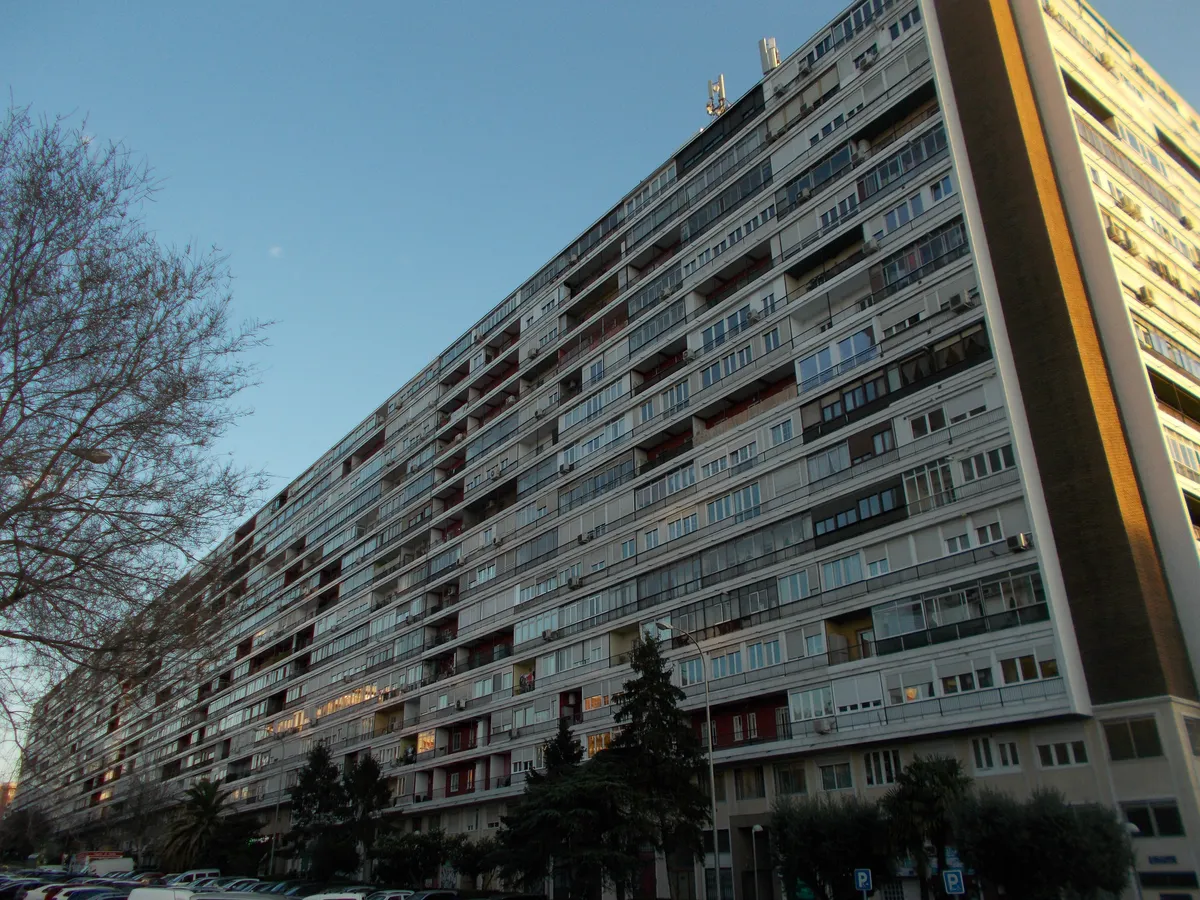
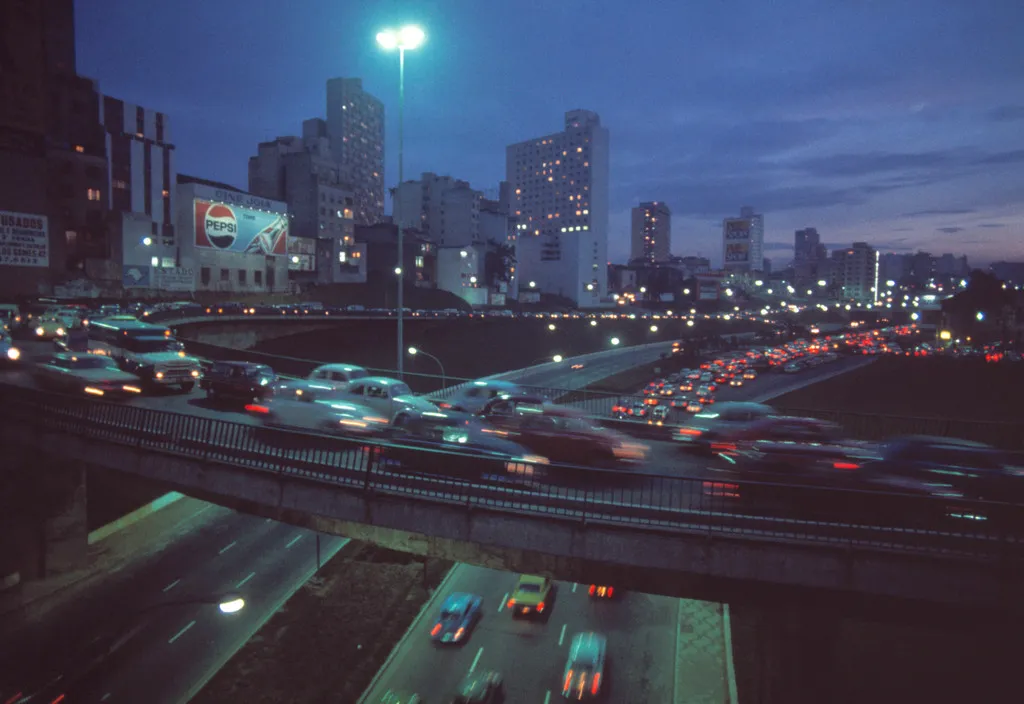
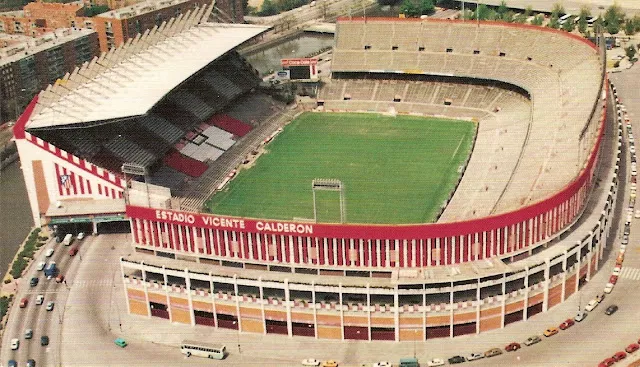
To this day, I still do not know whether the little duck houses in the middle of the Manzanares were really for ducks, nor how old the old trains were that I used to glimpse as a child behind the buildings along the Paseo de la Florida. What is certain is that there was a river with little duck houses full of ducks, ducks on the bank that I fed with pieces of bread, a restaurant beside it that, after nightfall, served a perfect cider roast chicken; mysterious trains standing behind the cider house; and a ring road linking the Calderón Stadium with Banús’s Beehives. There was also a flat in the Hortaleza district that I used to visit with my mother at weekends. Large out-of-town shopping and leisure centres had not yet appeared; whenever we needed to buy certain things, we would go into the city on Saturday afternoons and stop at Casa Labra: battered cod slices for my mother and cod croquettes for me.
(In the early 2000s, I went back to both restaurants with university friends, and both the chicken and the croquettes were every bit as good as they had always been. But something must have happened in the mid-2000s, because from then on the croquettes, the Donut Fondant, and other delicacies with no apparent connection to one another ceased to be what they had been. The doughnut is an unmistakable marker because I always ate one after my electric bass lesson, which was at ten o’clock on Monday mornings, since there were no classes on Mondays in my final year at university. That was in 2004, and the Donut Fondant was still the same, and the moment that truly justified the week, although I had no idea at the time. Very soon afterwards, it became the unrecognisable version that has remained to this day. The chicken, in more recent years, was not quite as good as it had once been either, though in this case the decline may simply have been due to ordering it for delivery instead of eating it at the restaurant, served straight from the rotisserie onto the plate.)
In alternation with those weekend plans, my mother and I also often went on family visits. Looking back now, I realise there really were a great many relatives on both sides of my family, despite the unusually high number of conflicts, oddities, and people who had died far too young — and whom I never got to know — in my family tree. I never had a problem with any of them. Many are probably still alive today, and yet almost all of them have been gone from my life for nearly thirty years. Or perhaps it would be more accurate to say that I was the one who disappeared, for it was I who moved house, bought a mobile phone — when mobile phones first began to exist — with a number nobody knew, and then went on to live in many different places. I do not know whether my relatives also changed their addresses and telephone numbers, but, in principle, I was the one who grew — I honestly do not know how much of it was purely accidental — difficult to trace. On the one hand, my life changed, and kept changing, for the worse, through causes beyond my control; on the other, and meanwhile, I allowed or even fostered distances that were either changes in themselves or — in most cases — temporary measures while waiting for a change for the better that never came. It happened, has happened not only with relatives, and not only with people. Life was uncomfortable. Small talk loomed large — ever after. The first and most basic questions, the most conventionally social, were the most painful of all.
*
When I was little, my mother’s sister’s husband always greeted me on the magical thirteenth floor overlooking the M-30, in his powerful voice of a retired Galician paratrooper:
‘¡Hombre, Don Francisco!’
This is certainly no trivial detail, for my uncle was very fond of cracking jokes, yet nobody regarded him as a man who was warm from the outset or easy to get along with. He did not get on with just anyone. For that matter, he never got on with my brother, who was also in the military. My brother had obtained his driving licence in the army, where he had enlisted as a volunteer at the age of sixteen — when I was three, then — and became the chauffeur of a senior officer. Through more misfortune than fault, he would later become involved in a serious incident concerning a car. I think it was this episode that ultimately led to his leaving the army, although without my uncle’s intervention he would almost certainly have ended up in a military cell. Yet their relationship had been tense ever since my brother was a child. And I think my uncle’s relationship with Antonio, my aunt’s son, was not easy either. (The magic of that thirteenth floor was not, then, universal, just as the architectural magic of the Beehive that housed it was not.)
One afternoon, my aunt and uncle, my mother and I were having an aperitif at a pavement table outside a bar in the Beehives neighbourhood (known as Barrio de la Concepción) when my aunt, who was not given to offering advice, urged me with remarkable seriousness to make mistakes:
‘Now that you’re young, you have to make mistakes. Make lots of them, because later you won’t be able to.’
I have often thought about that urgent counsel, especially during much later periods of my life — that is, precisely those in which, according to my aunt, I was no longer supposed to make mistakes. I still cannot decipher the exact abstract structure and nuances of her adage, but what continues to grip me is what she was thinking at the very moment she came out with it so abruptly: the three adults chatting without a trace of drama, one turning towards me with those words. My aunt had a reputation for being a great cook, yet she claimed that she did not like cooking. She did like going to the cinema and was a skilful oil painter. Her landscapes, still lifes, and a realistic portrait of her youngest daughter hung on the walls of the flat.
My mother’s sister’s family picture was similar to ours, with the important difference that the head of the family did not die. I can tell now to what extent there were parallels — now that I do know the essential portrait of my own family.
Obviously, my homologue was the youngest daughter (a few years older than me). She was my uncle’s first and only daughter: I do not know whether the same fact was concealed from her, leading her to believe that she had been an unwanted child, or whether she knew the truth from the beginning, without the need for an accidental revelation much too late. In any case, she knew she had been welcome in the world and important to it, and it showed: not in any form of conceit, but in the cheerful calm that is the true mark of the invulnerable, so noticeable in the rich. There was also (homologically) disagreement over the choice of her name, just as there had been over mine. One side advocated María; the other, Olga. In the end, they gave her both, and everyone called her by whichever one he preferred. There were even people who called her by both names in succession, in their favourite order: either María Olga or Olga María. By the time the television series aired (from 1989 onwards), she started calling her father Major Dad (‘Papá Comandante’), though I still do not know what his actual rank was.
Her maternal siblings, Maribel and Antonio, were not much older than she was, unlike my own siblings, who were much older than me: here too, the structural parallels dissolve. In fact, the usual scene was my mother and I visiting the couple and finding nobody else there. (None of my cousins was a child or an adolescent like me, not even the youngest: they already had ‘their lives’ outside the family home. I, by contrast, preferred that life to what would have been ‘my life’ with the people my own age whom I knew in Móstoles, and whom I saw as wicked barbarians with nothing good or interesting to offer.) In moments of silence — what are usually called awkward silences: two people left alone for a while by everyone else, two people sitting together on a bench in El Retiro Park, on the bus, or standing in a lift — my uncle would often hum arcane songs that only he knew, perhaps improvised by himself, producing a faint, laboured, precise ‘mmm’. My clear memory of this recurring humming suggests that there really were many moments with very few people around.
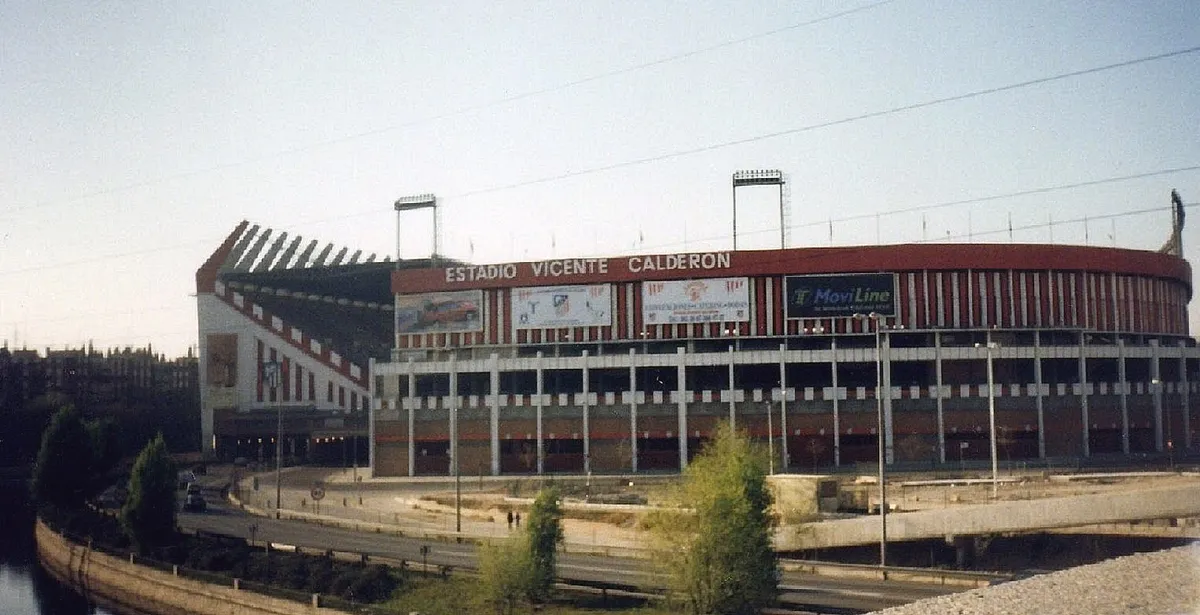
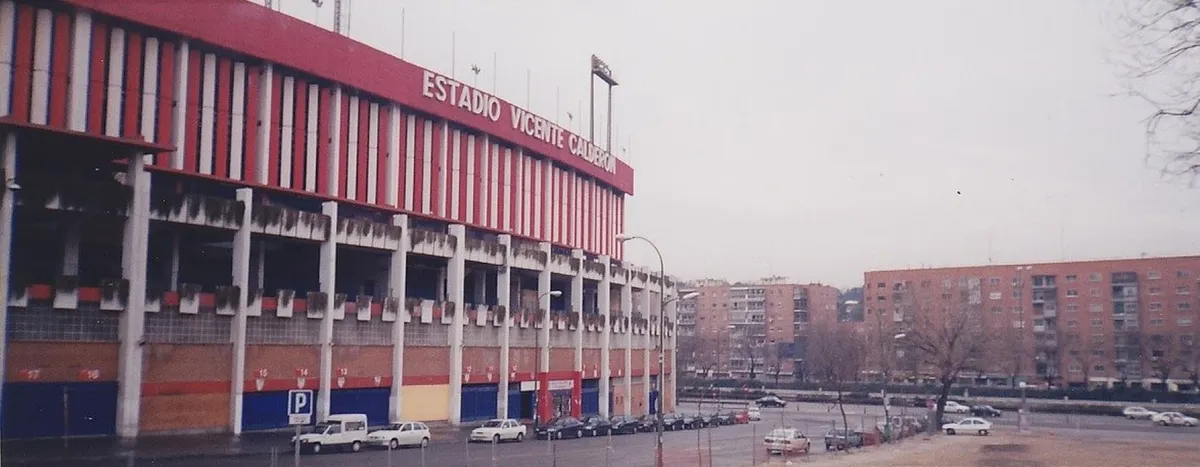
Almost every time, it was my mother and I who made the visit; we went in my father’s yellow Renault 12, repainted white, then in an absurd and short-lived early-1990s Seat Ibiza, white from the factory, and finally in the Opel Kadett, also white. My aunt and uncle did not have driving licences, they did not like Móstoles, and the journey by public transport took quite a while, much longer than by car. From Móstoles, the journey consisted of a stretch of the Extremadura Road and a stretch of the M-30; we saw the Calderón Stadium separated from us, on the outward journey, by the River Manzanares, soon afterwards the river went its own way and we continued along the M-30 until, on the left, the building whose rooftop Mercedes-Benz logo revolved sedately above a park appeared, and on the right, the three blocks of Banús’s Beehives, barely a few metres away from us — although a detour was necessary to reach the parking area and the entrance of the building, the northernmost of the three, in Virgen de Lourdes Street.
Several times, my mother and I stayed the night there while I was still a child. To make that possible, the armchairs unfolded into beds, which tells us that the bedrooms were occupied and, therefore, that the whole family was in the flat. Those were the early days, when my cousins’ presence was not yet — like mine, for instance — that of visitors. It must have been around that time that I told my aunt the kitchen was dirty. I do not remember the kitchen ever being dirty, nor can I imagine myself saying such a thing to my aunt, or to anyone else, but she never forgot it, and more than once she told me the story again, with a smile and a sense of wounded bewilderment. I do remember clearly her tall and delicious potato omelette one evening, and the scene the following day in which I was playing at being Superman. I proclaimed it out loud as I walked towards the window, and my uncle — with a look of concern that must have been the look on Plato’s face when he left all poets and lovers of fiction outside his ideal Republic — warned me that Superman was a fiction, and that if a human being jumped from that window, he would not be able to fly. I explained to him, sadly, that I already knew that, and that I had no intention of jumping out of the window or flying for real.
The image I find hardest to recover from that family is Antonio’s. The clearest portrait I have of him comes, moreover, not from their own home but from ours in Móstoles, where my mother, my siblings and I lived. It was there that I passed on a remark a boy (a neighbour? a classmate?) had made about the ponytail Antonio was wearing at the time. His style was like Billy Ray Cyrus in the video for ‘Achy Breaky Heart’, only considerably shorter, because my cousin was not American. He began:
‘Tell him that… Nah, don’t tell him anything.’
I remain curious about the reply that crossed his mind and was never spoken. The feeling is much the same as when I think about the story his mother must have had in mind when she threw her adage at me — so stressful that it still stresses me now, even though my time to follow it has passed: that business of making mistakes straight away and in abundance, mistake after mistake, no respite. My cousin lived for a while in our flat in Hortaleza, but I cannot remember — or perhaps nobody ever explained to me — how his stay there came to an end. He did something my mother did not like, and she felt uncomfortable discussing it both with him and with his parents. Nor do I remember what eventually happened, years later, to the flat in Hortaleza. I think it was one of those old rent-controlled flats with an extraordinarily low rent. In the M-30 block there was a passageway linking the rear of the building, which faced south (with traffic lights and a few bars with outdoor seating, where we sometimes enjoyed generous portions), to the main façade facing north (where the entrance was, in Virgen de Lourdes Street, and where the flat’s windows looked out, beneath them the trees, the long and fiercely contested car park, and opposite, in later years, the office building with its opaque, vicariously blue windows — like in the opening of Dallas, before J. R., Victoria Principal and the other stars appeared smiling in triplicate). Some five or seven years ago, I crossed paths in that passageway with a man who might have been Antonio. I stared at him to see whether he recognised me, which was far less likely than the possibility that the man really was my cousin. Perhaps I ought to have stopped him, introduced myself, and asked about him, his sisters and his parents.
During my last visits to the M-30 flat, first with my mother and, on the last occasion, with my sister, my sister’s husband and their son, my aunt would speak to us enthusiastically about her stays in Salou, where Antonio was then living with his girlfriend. Perhaps he still is. He was not at the table during that meal, my last meeting with this family, and I do not think Maribel was either. María Olga, or Olga María, had come with her boyfriend. Her oil portrait, painted by her mother, was still hanging on the wall running parallel to the table. Her mother, who presumably still did not enjoy cooking, had cooked the meal, and everything was as delicious as ever. Our visits, incidentally, usually took place on Saturday or Sunday afternoons, and we did not normally have lunch or dinner in the flat. My aunt and uncle were also very fond of going out.
We once made a surprise visit, and paradoxically, no one was home except for Maribel, the eldest daughter, who no longer lived there because she had moved to London and, like my mother and I, had found the flat empty during her impromptu visit. She talked with my mother for a long while and said that she loved England, that she was delighted to live there and that Sting was so handsome. Maribel, incidentally, was also beautiful, with delicate features and a foreign Anglo air. (I am sure she still has it even now, if she is still in London: say her name — Spain’s own Annabel, after Poe’s — and ‘Englishman in New York’ starts playing even in England.) Her sister was like that too, though I remember her as more bubbly, and Maribel as more melancholy, or nineteenth-century. While they were both winsomely posh, the elder was posh in the mould of Deborah Kerr, while the younger was pure Kate Winslet before Titanic. (Listening to Winslet in her Entertainment Tonight interview from 1994 is exactly like listening to my cousin: the same intonation, the same pauses, the same shifts in rhythm and volume — everything exactly the same, only with English words.) As we did not have mobile phones in the 1990s, it was not until my aunt and uncle came back that we realised they had not simply been out for hours, but had been away.
*
Despite my uncle once mistaking my drawing of Calderón Stadium for a bus, I was generally considered a very capable draughtsman. My aunt encouraged my mother to enrol me in an art academy. The teacher asked me for drawings I had made, I brought him some (mainly of cars), and he asked me, in amazement, if I had traced them. I started going to classes on Saturday mornings. I insisted on learning to paint in oils, but my teacher confined me for a long time to charcoal, which I was very good at even though it was not what I wanted to do. I tried oil on canvas eventually. One day my sister (who had never painted in oils) participated in one of my initial works, I saw her part, compared it to mine and knew that this technique was not my thing.
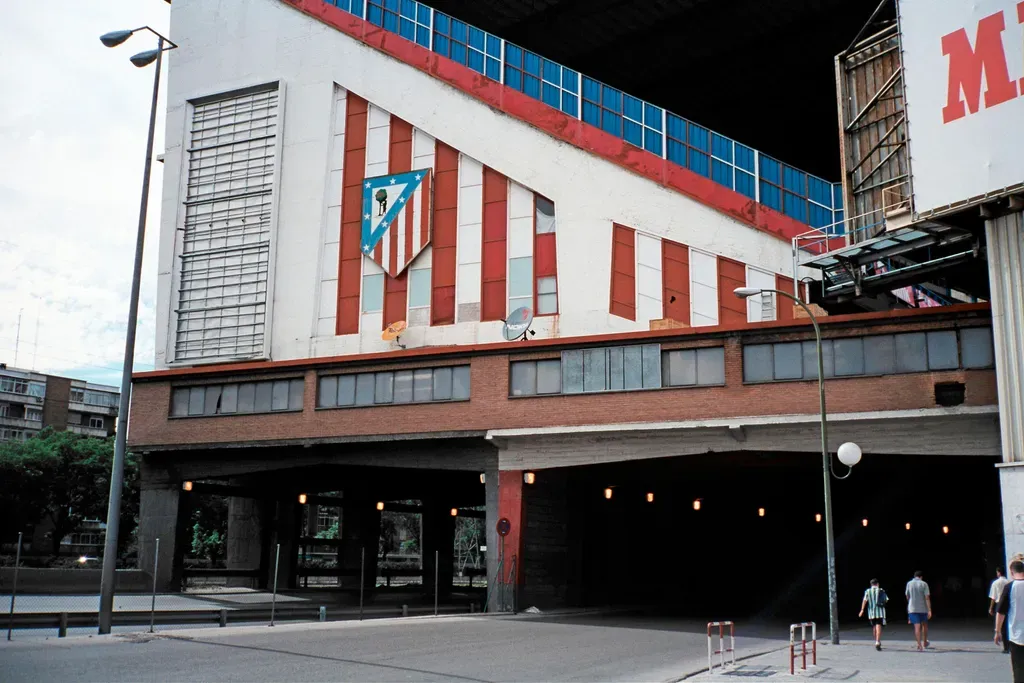
My aunt was not keen on football, but was a big fan of Schuster, who played for Atlético de Madrid at the time, in the Calderón Stadium before aluminosis, with the blissful concrete benches and the thin vertical red and white stripes on the façade.
I do not know whether my aunt’s preference for Schuster was parallel to mine for Magic Johnson, Arvydas Sabonis or Rafael Martín Vázquez. As a child, I was not attracted to sport. Sport was simply there, and my taste naturally gravitated towards the people involved in it whom I perceived as special, or more artistic. Real Madrid supporters admired Hugo Sánchez and Butragueño. I definitely preferred Martín Vázquez’s game, and I also liked the number 10 on his shirt.
As for the team one supported, it was not a matter of taste, it was not reason, ‘football philosophy’, nor the heart, nor will, nor whim. In Spain, in Madrid at least, one simply supported the team of one’s household, or, later, in adolescent rebellion, the most appropriate team against a father hated; or sheerly, whoever happened to be winning.
I started to like football the moment my uncle took me to the Calderón Stadium (while my mother and her sister were going to the cinema to see Tacones lejanos). Atlético de Madrid versus Real Oviedo. Concrete benches and seat pads. The river, the cars on the M-30 passing behind a big screen with a horizontal Coca-Cola sign and a vertical pack of Fortuna cigarettes. In-ear earphones. Cast members of Melrose Place series on the pitch (some redneck insults in the stands). Marbella… The rectangle of grass, seen from that concrete bench (at the exact centre of the North Stand, beneath the overhang of the upper tier), struck me as small — compared with the impression I had formed from television broadcasts, perhaps also influenced by Captain Tsubasa (‘Campeones’), which we all knew as Oliver y Benji because the opening theme sang those very words.
The second time I went into a football stadium was not long after the first. Relatives on my father’s side took me to the Bernabéu to see a Real Madrid – Atlético de Madrid match on Saturday, 16th May 1992, at eight o’clock in the evening, still in daylight, in over 30 °C heat. As in my first match, the stands smelled of cigars, Futre was playing, Luis Aragonés was managing from the bench, and the ball was the Adidas Etrusco Unico.
Three years later, at the Madrid Book Fair, my mother’s sister’s husband bought Los silencios de El Larguero, bought another copy for me, and took me to the bookstall where we had a pleasant chat with De la Morena as he signed our books. De la Morena was left-wing, Catholic and a supporter of Atlético de Madrid and its president, Jesús Gil: he said so openly and repeatedly on his late-night radio programme. My uncle was right-wing and detested Jesús Gil, yet he maintained that De la Morena had assembled a brilliant team on El Larguero and Carrusel. One might be inclined to conclude that their rapport was rooted in their shared support for Atlético, were it not for my uncle’s insistence that the club did not keep him awake at night (only the Spanish national team’s matches did). By then I had been a Real Madrid member for about a year and a half, and I would remain one for another year and a half. It was my early teens, when we had Canal+ at home and I began watching the Premier League on Saturday afternoons after lunch, and Serie A on Sundays. A classmate often wore an Éric Cantona shirt with the collar turned up, just as the Manchester United footballer used to wear it. I supported Liverpool then, though I soon began to lose my affection for Liverpool, Ajax, Real Madrid and football in general.
It has been many years since I last went to the Bernabéu. Some had pointed out that the stadium had become a tourist attraction, even during matches, and that nobody carried handkerchiefs anymore, only tissues. The clamour of thousands of waving handkerchiefs, shouting, booing and whistling directed at the players and the club’s board on 17 January 2026 disproved that observation.
My first memory of the Bernabéu is almost mythical: I had in mind an image that hung framed on the walls of taverns during my childhood. When my mother at last took me to see it in person (from the outside), my disappointment was immense. It was not the white spaceship, but a grey, weathered concrete behemoth.
The memories of the Quinta del Buitre era were close at hand but shrouded in the same mythology as the stadium. The real team and the real stadium I knew were a disaster. It was not the Real Madrid of the five consecutive league titles and European comebacks. The last European Cup had been won almost thirty years earlier. For me, Real Madrid was not an attractive trend, nor an international tourist attraction surrounded by marketing, nor a sporting or aesthetic spectacle, nor great victories, nor any of the successive stadiums: the one from the photographs in bars during my childhood, the one of the mid-nineties, the later one without standing room, or the present-day one. Real Madrid was an ideal inherited at home, one that had to be rescued. My first active, conscious, genuine attachment to Real Madrid was forged, therefore, as a duty and a challenge, far removed from past and future glory.
Victories would come later, and with them, my doubts. The forlorn stadium, the dramas of the lost league titles in Tenerife, the problems, the undeniably bad things, simply hurt and disheartened me, but they did not distance me: on the contrary, they even sowed a certain epic and martyr-like sense that seemed to have some meaning. It was precisely the triumphant Real Madrid, since 1995, that truly alienated me and provoked a conflict: the suspicion arose within me that Real Madrid, in its essence, the ideal Real Madrid, was not, had never been, and could never be what I had imagined and desired.
At the funeral home, with my mother’s body present, a relative on my father’s side told me:
‘You must be happy, right?’
Seeing my baffled expression, he justified:
‘Of course, because of the seventh European Cup!’
I think I merely made a simple, ambiguous nod, because it was not the time to explain anything; but no, I was not happy — and I would not have been even if my mother had not just died.
Shortly afterwards came my last visit to the M-30 flat (with my sister, her husband, their son, my aunt and uncle and their youngest daughter with her boyfriend). My uncle sat at the head of the table, at one of the two short ends. Instead of his walrus moustache in the style of Bismarck or José María Íñigo, he wore a goatee, and his sparse hair had been shaved. I would have sworn he was thinner too, despite the fact that whenever anyone had remarked on his belly, he had always replied that he had spent fifty years thin and was now going to spend fifty years fat. What comes back to me now, quite arbitrarily, is the bottle of Beefeater, the blue glass tumblers and the stirrers that used to land on the table during those visits. I do not remember who drank that gin, or what anyone drank in general. To me, that rectangular, completely transparent bottle, the tumblers and the stirrers were ends in themselves as objects in the landscape; I never paid attention to their operational details. Fortunately, all of that was always the same, even on that last visit, when we saw one another and spoke for the last time, twenty-seven years ago now (in 2026). I would not rule out the possibility that no one then, not even my uncle, drank a single drop of that gin, but the gin was still there, like the blue glass tumblers and the long stirrers, with their uneven and quirky form.
Photographs